
Usable depth
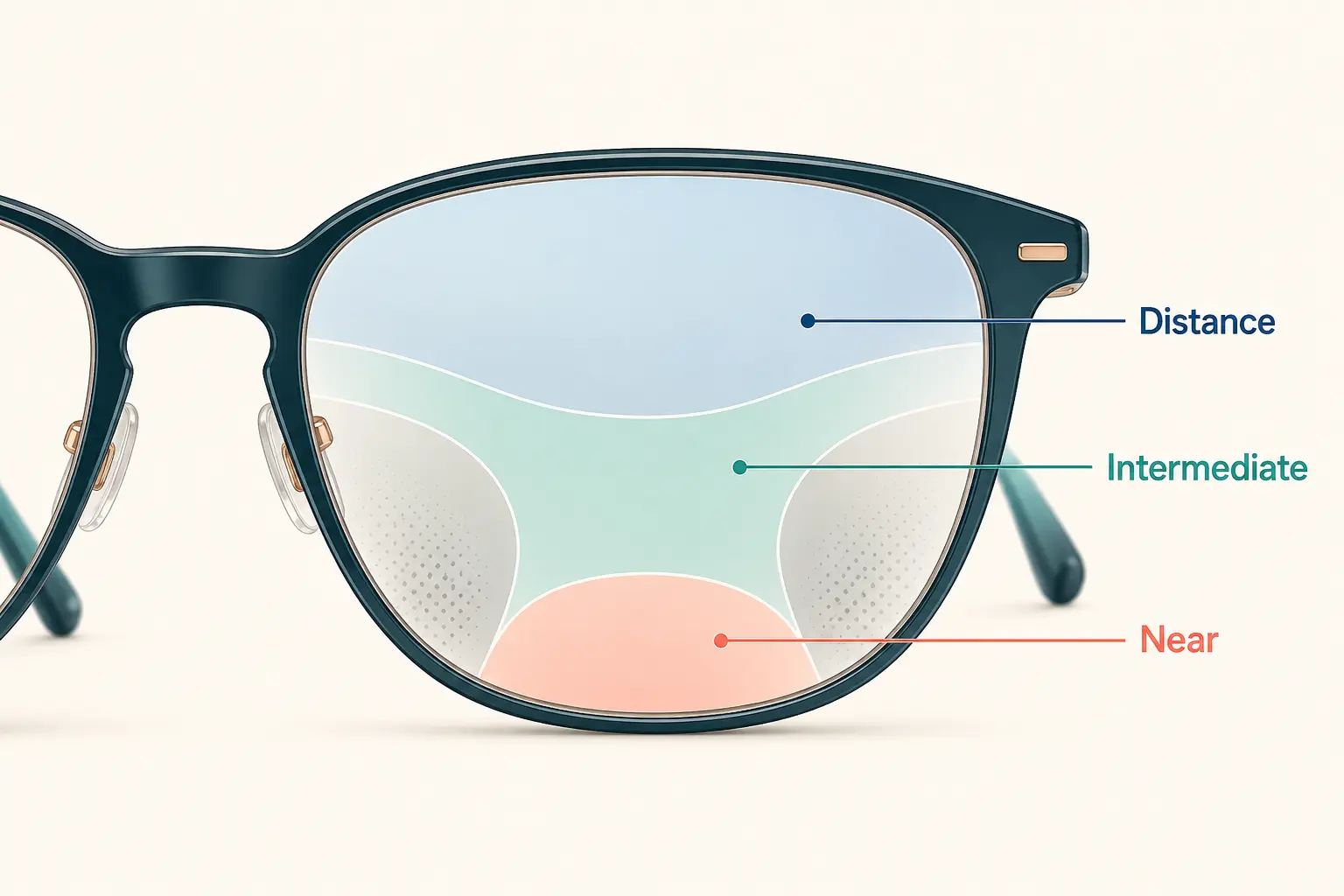
The lens needs enough vertical room for the selected corridor and near zone—not merely a tall-looking outer shape.
Eyewear Advice · Eyewear After 40
Progressive lenses depend on precise measurements and a stable relationship between the frame and your eyes. The right frame provides usable depth, reliable fit, and appropriate scale without forcing you into a generic style.
The Short Answer
A progressive lens blends distance, intermediate, and near powers from top to bottom. The frame must provide room for the chosen design and stay in the measured position during everyday wear.
A frame that slides, twists, sits too far from the eyes, or places the eyes awkwardly can make the lens harder to use even when it looks attractive.
Six Frame Priorities
The lens needs enough vertical room for the selected corridor and near zone—not merely a tall-looking outer shape.
The bridge should hold the frame at a repeatable height without constant sliding or concentrated pressure.
Excess width can shift eye position and add lens area; too little width can squeeze or distort the fit.
Your pupils should sit in a useful part of the lens shape rather than at an extreme edge.
Tilt, wrap, vertex distance, and temple fit should be appropriate and maintainable for the selected frame and lens.
Power, prism, lens material, and design can influence which frame dimensions and shapes are most successful.
Bigger Is Not Always Better
A very shallow frame may restrict lens-design options. But an oversized frame can add weight, thickness, and peripheral lens area without improving the useful viewing zones.
Look for a proportionate frame that supplies the fitting height your chosen design requires while keeping your eyes well positioned.
Measurements Matter
Monocular pupil distances and fitting heights locate the lens design relative to each eye. The frame should be adjusted first because bridge position, temple fit, tilt, and height affect those measurements.
Accurate fabrication and verification matter just as much as the frame choice.
Style Still Matters
Many rectangular, rounded, cat-eye, geometric, acetate, and metal frames can support progressive lenses. Start with the optical requirements, then choose the color, line, scale, and personality that suit you.
Related: choose shape using more than a face-shape chart →Progressive Lens FAQ
Many frames can, but not every frame is a good match for every progressive design, prescription, or wearer. Usable lens depth, eye position, stability, wrap, tilt, and measurements all matter.
Not automatically. A frame needs sufficient usable vertical space, but excessive width or depth can add weight, thickness, and unwanted peripheral lens area. Proportionate is better than simply bigger.
Some modern progressive designs can work in shorter frames, but the selected lens must support the available fitting height. The frame should be evaluated before the lenses are ordered.
Progressives depend on the frame's position relative to your eyes. Changes in height, tilt, bridge position, or vertex distance can change how you access the viewing zones. Return to your optician if vision changes after an adjustment.