
Frame wrap
Also called the face-form angle: how much the frame curves around your face when viewed from above. Wrap changes the angle at which your eyes look through each lens. A compatible personalized design can compensate for that geometry.
Eyewear Advice · Progressive Lens Pricing
Progressive lenses differ in design, usable viewing space, and how closely they are tailored to you. Here’s what you are paying for as you move from budget to premium to personalized.
The Short Answer
Some progressives cost more because they use more advanced designs to give you wider usable viewing areas and, at the personalized level, account for how your chosen frame actually sits on your face. At Bright Side Optical, we call our middle tier premium progressives and our highest tier personalized progressives. Personalized designs can incorporate frame wrap, back vertex distance, and pantoscopic tilt, alongside your prescription and fitting measurements.
If you wear your glasses all day, the value is in everyday use: more room to find clear vision when reading, looking at a screen, or moving between distances. The best choice combines a suitable design, accurate measurements, a stable frame, and the activities that matter to you.
At Bright Side Optical in Austin, we use Optikam digital measurements to help personalize the lens plan. We explain what the upgrade changes so you can choose based on the finished glasses.
See the Difference
Progressives place distance vision toward the top, intermediate vision through the middle, and reading vision lower down. The clear zones are surrounded by areas of unwanted blur. A wider usable viewing area gives your eyes more room to work before you need to reposition your head.
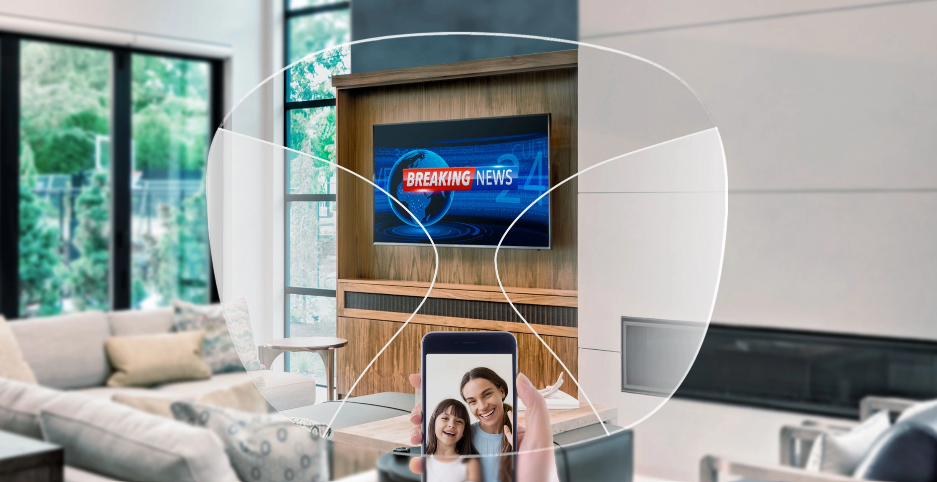
This example shows a narrower usable corridor. You may need to point your head more directly at what you want to see, especially through the intermediate and reading areas.
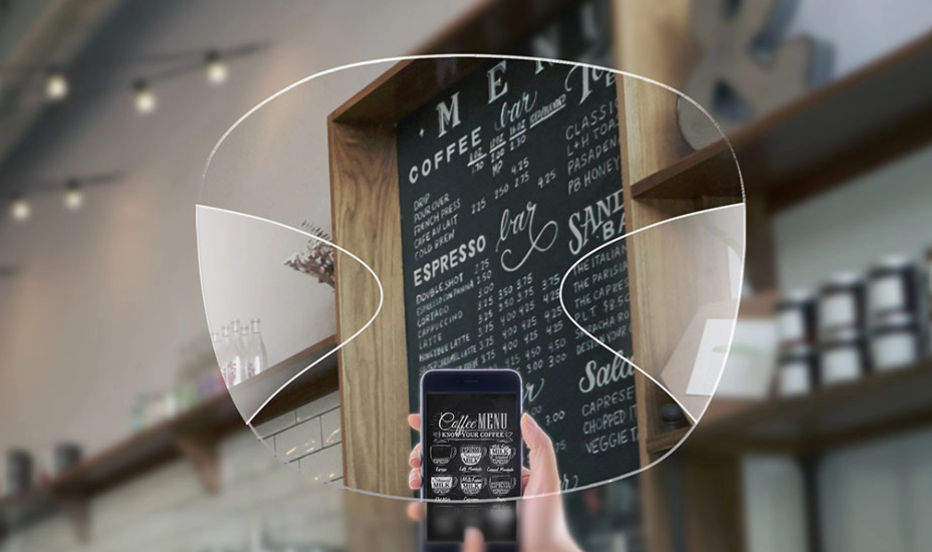
This example opens up the viewing area compared with the budget illustration. The useful question is how much room the design gives you at the distances you use throughout the day.
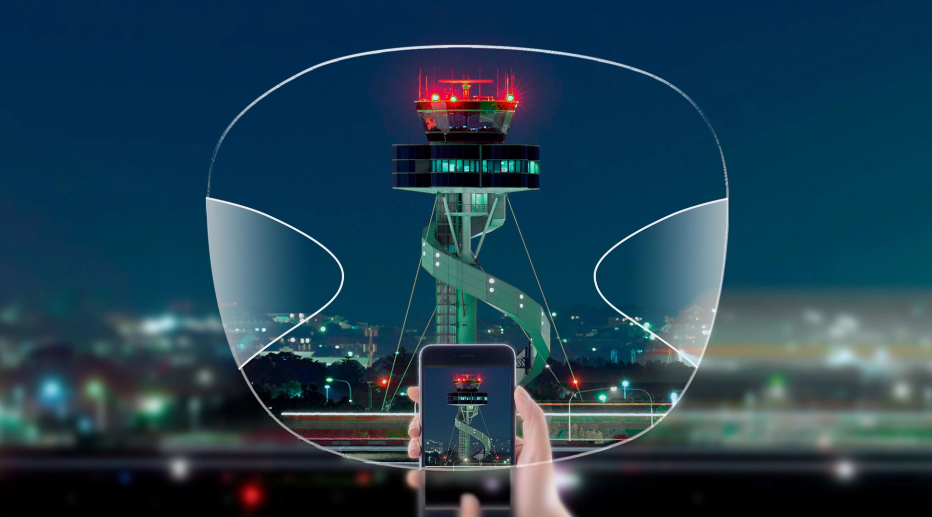
This example shows the broadest usable area. A well-chosen personalized design aims to give you more room to see clearly, with optics calculated around your prescription and how the frame sits on you.
Tap an image to view it full size. These are illustrative simulations of three progressive levels, shown in different scenes—not measured lens maps or a prediction of your exact vision. At Bright Side, premium is our middle tier and personalized is our highest tier. Tier names vary between opticals; actual performance depends on the particular design, prescription, and fitting.
Why Width Matters
If only a narrow part of the lens is clear at the distance you need, it can feel as if you are searching for a small sweet spot. A broader useful zone can give you more freedom to look across a page or between nearby objects without constantly lining everything up with that spot.
In practical terms, wider clear viewing areas are better when they serve the distances you use. But width is not one universal number: a lens can prioritize reading, intermediate work, or a more balanced everyday view. We want the extra room where it helps you most.
Even a personalized progressive still has peripheral blur and design tradeoffs. It should offer a meaningful improvement for your needs, rather than a promise that the whole lens will be equally clear.
Personalized to How You Wear the Frame
Two people with the same prescription can wear their frames at different distances and angles. Those differences change how they look through the lenses. A personalized progressive can use your measured position of wear instead of relying only on assumed average values.
Also called the face-form angle: how much the frame curves around your face when viewed from above. Wrap changes the angle at which your eyes look through each lens. A compatible personalized design can compensate for that geometry.
The distance from the back surface of the lens to the front of your eye. A lens sitting closer or farther away can change its effective optics, particularly with stronger prescriptions. Personalization accounts for that distance.
The vertical angle of the frame when viewed from the side—typically with the lower part of the lenses closer to your cheeks. It affects how your line of sight passes through the lens. Measuring it helps the design reflect your actual frame position.
These inputs help the laboratory optimize the optics as worn. The wider zones also depend on the underlying progressive design; the three measurements are part of personalization, one part of the complete personalized lens design.
Measured at Bright Side Optical
At Bright Side, we use Optikam to capture digital fitting measurements with the selected frame on your face. Its measurement system records information such as monocular pupillary distances, fitting heights, vertex distance, pantoscopic tilt, and frame wrap.
Optikam describes its frame-mounted Optikam Posture Device system as providing sub-millimeter accuracy for position-of-wear measurements. In plain language, that means accuracy finer than one millimeter. We use that precision to support a lens order built around your frame fit.
We adjust the frame before measuring and review how it sits in your natural posture. The measurements then inform compatible personalized lens designs. Technology and professional fitting work together: a frame that slides after you leave can move the viewing zones away from where they were intended to sit.
Read Optikam’s measurement informationWhat Makes the Upgrade Worthwhile?
“Digital” describes a manufacturing approach. At Bright Side, premium and personalized identify different tiers, with personalized as our highest level. The specific design and measurements explain what each tier offers. Ask which design is being recommended, whether it uses your individual wrap, vertex distance, and tilt, and what it prioritizes for your daily tasks.
An upgrade is particularly worth discussing if you wear progressives throughout the day, feel restricted by a narrow reading or intermediate zone, or need your lenses to work with a more demanding prescription or frame fit. If your current glasses are working comfortably, we can explain whether a change would offer enough benefit to justify the investment.
Price also includes choices such as lens material and coatings, which are separate from progressive design. We will help you understand the complete lens plan rather than assume the most expensive combination is automatically your best choice.
Build the Complete Pair
A beautifully personalized lens needs enough usable frame depth and a fit that stays in place. We choose the frame and lens design together, then measure the pair as you wear it. See how to choose frames for progressive lenses.
Everyday progressives also balance several distances. If your day involves hours at multiple monitors, dedicated computer glasses may give you a more suitable workspace view. Paying more for an everyday progressive does not erase that difference in purpose. Compare computer glasses and everyday progressives.
Bring your current glasses and tell us where they fall short. That helps us decide whether your next improvement should come from design, measurements, frame fit, or a separate pair for a specific task.
Progressive Pricing Questions
The price can reflect a more advanced lens design, wider usable viewing areas, individual frame-fit personalization, lens material, coatings, and fitting service. At Bright Side Optical, premium is our middle tier and personalized is our highest tier. We explain the specific differences before you choose.
Premium is our middle tier. Personalized is our highest tier, with a lens design tailored to individual measurements such as frame wrap, back vertex distance, and pantoscopic tilt. The design and viewing-zone balance are chosen around your prescription, frame fit, and daily tasks.
Many advanced designs offer wider usable zones than more basic designs, especially for intermediate and near tasks. The amount and location of the improvement vary. Wider clear vision at the distances you actually use is the goal, rather than a tier label alone.
These measurements describe the lens position in front of your eyes. Personalized progressive designs can use them to compensate for the frame's wrap, the distance between lens and eye, and the vertical tilt, so the optics reflect how you actually wear the glasses.
Yes. We use Optikam to capture digital eyewear fitting measurements, including position-of-wear information for personalized lenses. We combine the measurements with professional frame fitting and review.
Optikam describes its frame-mounted Optikam Posture Device system as providing sub-millimeter accuracy for position-of-wear measurements. That means measurement accuracy finer than one millimeter. Good frame adjustment and natural posture remain important to the process.
No. All progressive lenses have design tradeoffs and peripheral areas that are less clear. Personalized designs aim to improve the usable viewing areas and how the lenses work for you; it does not make every point in the lens equally sharp.
Not always. Everyday progressives balance distance, intermediate, and near vision. Someone who spends hours at a large monitor or multiple screens may still benefit from dedicated computer lenses with a workspace-focused viewing area.
Further Reading
Manufacturer explanations of position-of-wear customization, fitting, and progressive design informed this guide. These references explain the technology; your Bright Side lens recommendation will identify the particular design suitable for you.